
Your bookkeeper answers the phone. It sounds exactly like you. Same voice, same way of talking. You sound rushed. A supplier needs to get paid today, and you need a wire sent before lunch.
One problem. You never made that call.
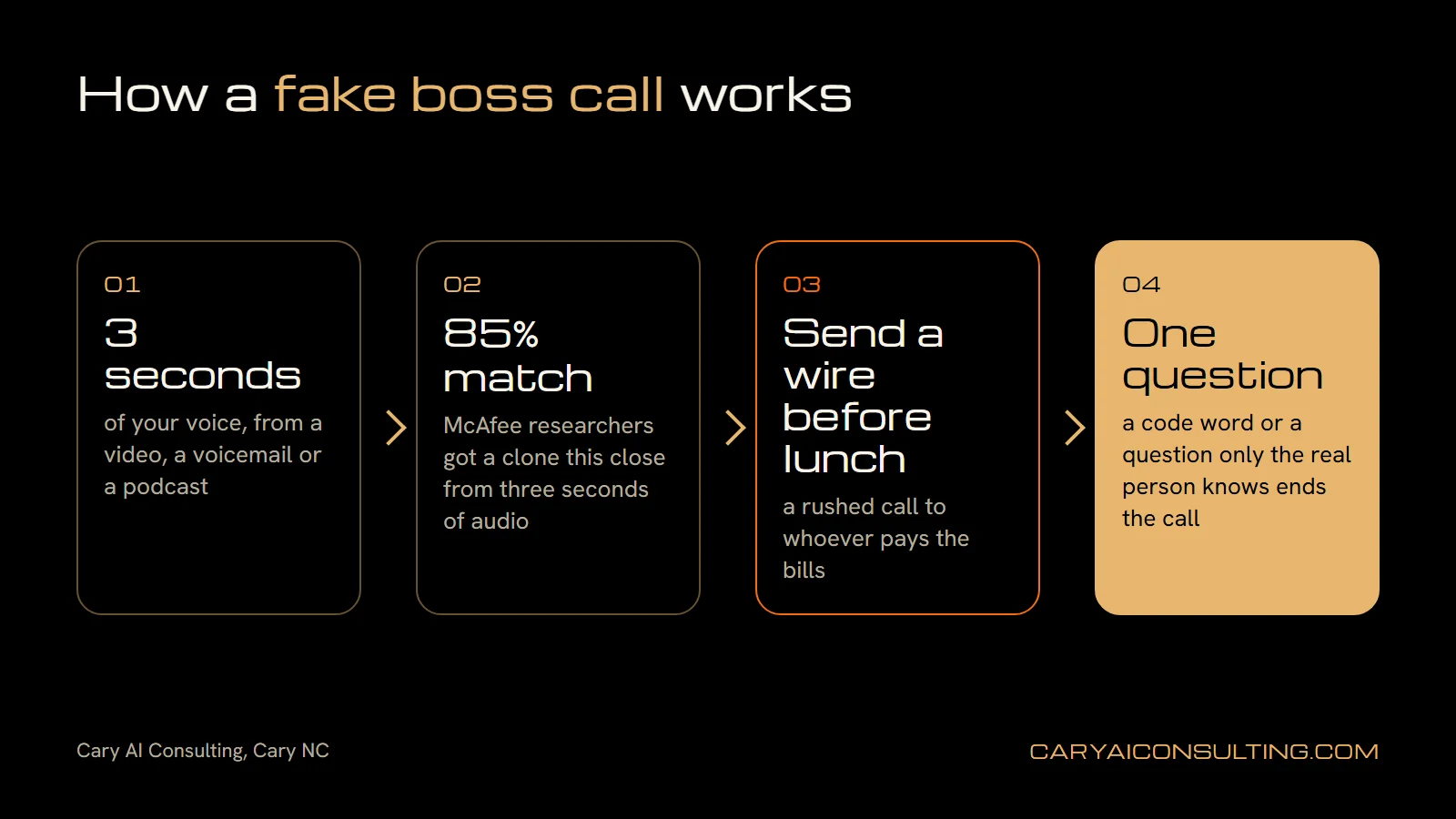
That is an AI voice scam. And making one is easier than you might think. I tried cloning my own voice for a video on my YouTube channel. I was surprised by how little it took.
How little it takes
ElevenLabs is one of the best known voice tools. Its own app says it can clone a voice from about ten seconds of audio. I made a ten second clone of myself. The only check I had to pass was ticking a box saying I had the rights to the voice.
Researchers at McAfee got an 85 percent voice match using just three seconds of audio. Their survey also found that 70 percent of adults were not confident they could tell a cloned voice from a real one.
Now think about where someone could hear your voice. Your business page has a video. Your voicemail has a greeting. Maybe you have been on a podcast or spoken at the chamber.
The fake boss scam
In January 2024, a finance worker in Hong Kong got on a video call with his company's chief financial officer and several colleagues.
According to Hong Kong police, everyone on that call was fake except the finance worker. He went on to make fifteen transfers totaling about 25 million dollars. The company was Arup, an engineering firm.
That happened at a big company. At a small business, the risk can be worse. One person often handles the money, and there may be nobody checking behind them.
But not every scam works.
In July 2024, Bloomberg reported that a Ferrari executive received a call that sounded like the company's chief executive. Even the accent matched.
Something felt off. So the executive asked what the title was of a book the chief executive had recommended a few days earlier.
The call ended.
Sometimes one question is all it takes.
Three rules for your business
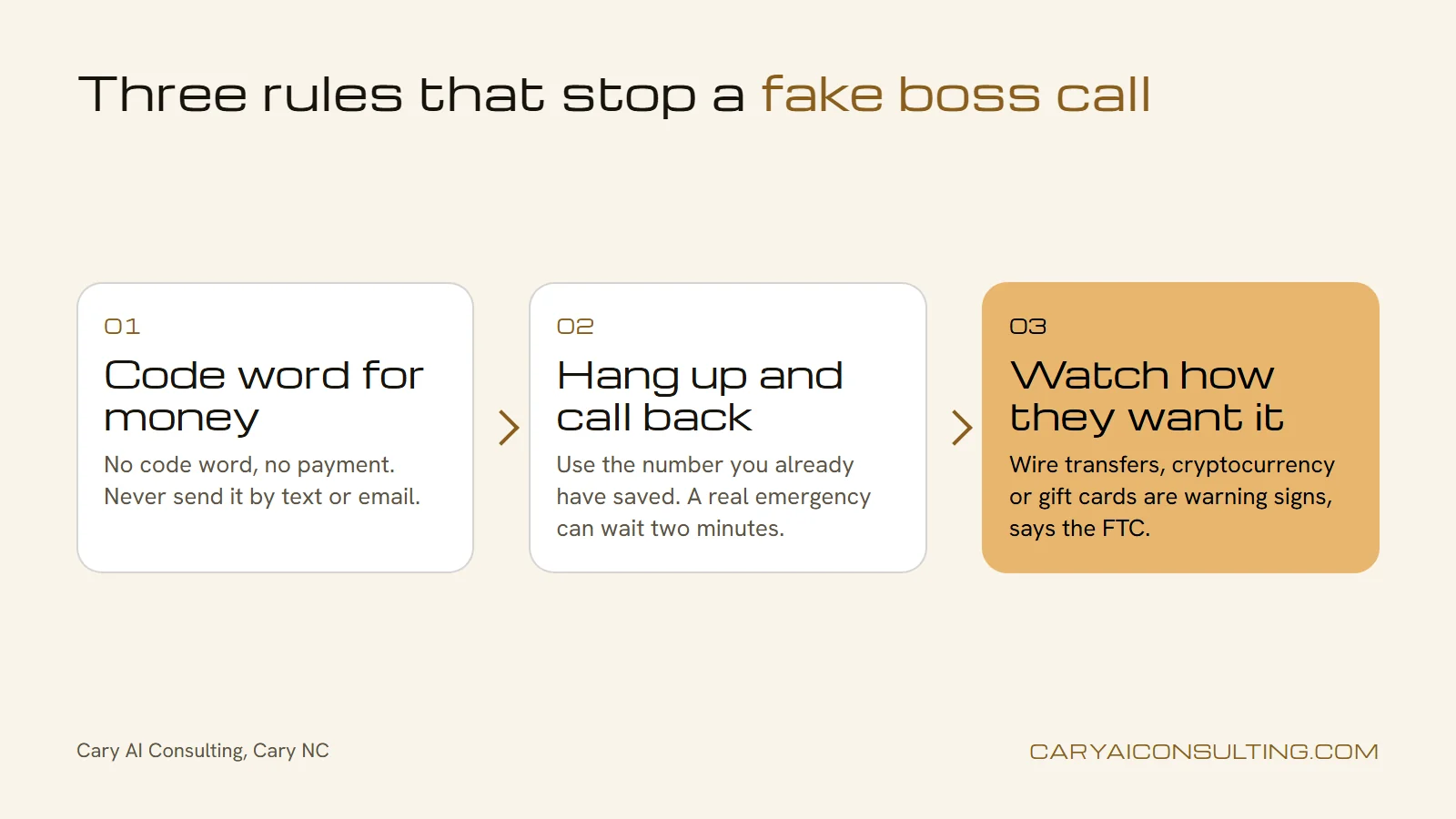
- Use a code word for money. Pick a word or phrase that anyone requesting a payment, a wire or a change to bank details must know. No code word, no payment. And never send that word by text or email.
- Hang up and call back. Someone calls asking you to send money? Hang up. Call them yourself using the number you already have saved. A real emergency can wait two minutes.
- Pay attention to how they want the money. The FTC says requests for wire transfers, cryptocurrency or gift cards are warning signs of a scam.
Put those three rules on a piece of paper. Spend five minutes at a team meeting going over them with anyone who handles payments. That includes you, your office manager and your bookkeeper.
The FTC says Americans reported losing almost 3 billion dollars to impostor scams in 2024. That includes scams with and without AI.
AI gives scammers a new way to sound convincing. But the trick has not changed. Scare someone, rush them, and hope they send the money before thinking.
What does your software cost a year?Tick the apps you pay for and see them next to a $20 Claude plan. Free calculator.Watch the video
In the video below, I clone my own voice using ten seconds of audio. Then I play three clips and let you figure out which one is actually me.
 Watch on YouTube: I Cloned My Own Voice. Here's How Scammers Use It
If you want help putting rules like these in place, or you are wondering how to use AI safely in your own business, book a free call. I can walk you through what makes sense and what does not.